
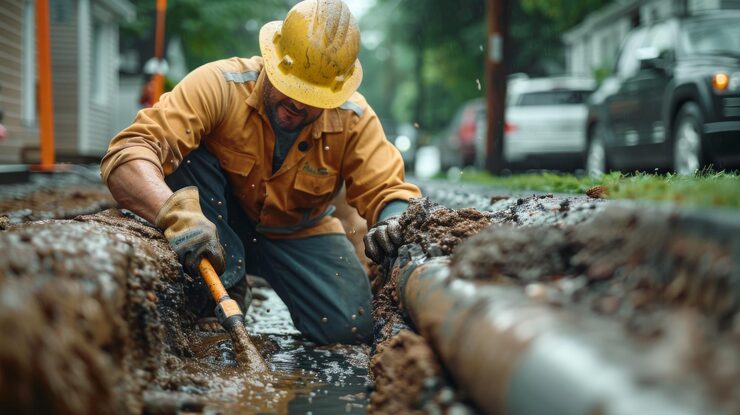
A damaged sewer line can cause slow drains, unpleasant odors, sewage backups, and costly property damage. When these problems appear, homeowners often face an important question: should they repair the existing sewer line or replace it completely? Understanding Sewer Line Repair Vs Replacement can help you choose the right solution for your home, budget, and long-term needs. The best option depends on the location of the damage, the condition of the pipe, the age of the sewer system, and the cost of the work.
At New Drain of Florida, we help homeowners understand their sewer line problems and explore suitable repair options. This guide explains the differences between sewer line repair and replacement, their costs, and how to determine which option may work best for your property.

What Is the Difference Between Sewer Line Repair and Replacement?
Sewer line repair and replacement both address damaged pipes, but they work differently.
What Is Sewer Line Repair?
Sewer line repair focuses on fixing a damaged section of an existing pipe. It may involve sealing a crack, removing a blockage, repairing a leaking joint, or completing a spot repair on a specific section. Repair is often a practical choice when the damage is limited and the rest of the pipe remains in good condition.
For example, if root intrusion has damaged one section of a sewer pipe, a plumber may be able to repair that area without replacing the entire line.
What Is Sewer Line Replacement?
Sewer line replacement involves removing and installing a new pipe. Depending on the extent of the damage, the plumber may replace a small section or complete a full sewer line replacement. Replacement may be necessary when the pipe has collapsed, several sections are damaged, or widespread pipe deterioration makes repeated repairs impractical. The goal is to restore reliable wastewater flow and reduce the risk of future problems.
When to Repair or Replace a Sewer Line
Choosing between repair and replacement starts with understanding the condition of the pipe.
When Sewer Line Repair Is the Better Option
Repair may be suitable when:
- The damage is limited to one small section.
- The pipe is structurally sound in most areas.
- A cracked sewer pipe can be repaired safely.
- A damaged joint is causing a localized leak.
- Root intrusion is limited and the pipe can be restored.
- The repair offers a reliable solution at a reasonable cost.
A targeted repair can save money and reduce disruption to your yard, driveway, landscaping, or other property features.
Signs a Sewer Line Needs Replacement
Some sewer problems indicate more extensive damage. Common warning signs include:
- Frequent sewage backups or recurring drain blockages.
- Multiple cracks or damaged sections along the pipe.
- A collapsed sewer line that prevents wastewater from flowing.
- Severe pipe deterioration caused by age or corrosion.
- Repeated repairs that fail to solve the problem.
- Persistent sewer odors or unexplained wet areas in the yard.
These symptoms do not automatically mean the entire line must be replaced. A professional inspection is needed to identify the cause and determine the extent of the damage.
Sewer Line Repair vs. Replacement Cost
The cost of sewer line repair vs replacement depends on several factors, including pipe depth, material, accessibility, damage severity, labor, and the repair method. A small spot repair generally costs less than replacing a long section or the entire sewer line. However, the cheapest immediate option is not always the most economical over time.
Repair costs may increase when the same pipe develops repeated problems. In such cases, replacement may offer better long-term value.
When comparing estimates, homeowners should consider:
- The total length of pipe affected.
- The condition of the existing sewer line.
- Whether excavation is required.
- The cost of restoring landscaping or hard surfaces.
- The expected durability of the proposed solution.
- The likelihood of needing additional repairs.
Ask for a detailed estimate that explains the recommended work and any additional restoration costs. Because every property is different, an inspection is the best starting point for an accurate quote.

Sewer Pipe Lining vs. Replacement
Traditional replacement is not the only option for damaged sewer pipes. Trenchless pipe lining may provide another solution when the existing pipe is suitable for rehabilitation.
What Is Trenchless Pipe Lining?
Trenchless pipe lining, often called cured-in-place pipe (CIPP) lining, involves placing a resin-coated liner inside the existing pipe. The liner is cured to form a new, durable inner surface. This method can repair certain cracks, leaks, and other defects without digging a continuous trench along the entire sewer line.
When Is Pipe Lining Suitable?
Pipe lining may be appropriate when the existing pipe has enough structural integrity to support the process and the damage can be addressed with a liner. However, it is not suitable for every sewer problem. A severely collapsed, badly deformed, or extensively damaged pipe may require excavation and replacement. The choice between sewer pipe lining vs. replacement depends on the inspection results, pipe condition, access, and project requirements.
Trenchless Sewer Repair vs. Traditional Replacement
Trenchless sewer repair methods can reduce the need for extensive digging. This may help protect landscaping, patios, walkways, and driveways. Traditional replacement involves excavating the affected area to remove and install pipe. Although it can cause more surface disruption, it may be the most appropriate solution for severely damaged or collapsed pipes.
Neither method is automatically better in every situation. Trenchless repair is worth considering when the pipe condition allows it, while traditional replacement may be necessary when the existing line cannot be reliably repaired. A qualified plumber can explain which options are technically suitable for your property.
How a Sewer Camera Inspection Helps
A sewer camera inspection is one of the most useful steps in deciding between repair and replacement. During the inspection, a plumber guides a specialized camera through the sewer line to look for cracks, root intrusion, blockages, separated joints, and signs of pipe deterioration. The inspection helps identify where the problem is located and how much of the pipe is affected.
This information supports a more informed recommendation. Instead of guessing based on symptoms alone, homeowners can understand whether a spot repair, trenchless pipe lining, or full sewer line replacement is appropriate.

How to Choose the Right Option for Your Home
Before making a decision, consider these steps:
- Identify the problem: Note recurring backups, slow drains, unusual odors, or wet areas around your property.
- Schedule an inspection: Have a professional evaluate the sewer line and identify the cause.
- Compare suitable solutions: Ask whether a spot repair, pipe lining, partial replacement, or complete replacement is appropriate.
- Review the total cost: Consider installation, excavation, surface restoration, and possible future repairs.
- Think about long-term reliability: Choose a solution that addresses the underlying damage rather than only the visible symptoms.
The right decision should balance immediate cost, the condition of the existing pipe, and the likelihood of future problems.
Conclusion
Choosing between sewer line repair and replacement depends on the extent of the damage and the condition of the existing pipe. Minor, localized problems may be resolved with a repair, while a collapsed or extensively deteriorated sewer line may require replacement. Trenchless pipe lining can also be an option for suitable pipes.
At New Drain of Florida, we help homeowners explore practical solutions for damaged sewer lines. A professional sewer camera inspection can provide the information needed to make a confident decision. If you are experiencing recurring sewer problems, contact New Drain of Florida to discuss your concerns and determine which solution may be right for your home.
Frequently Asked Questions
Is it cheaper to repair or replace a sewer line?
Repair is usually less expensive upfront when the damage is limited to a small section. Replacement may provide better long-term value when the pipe has widespread damage or requires frequent repairs. The actual cost depends on the pipe condition, accessibility, and repair method.
How do I know if my sewer line needs replacement?
Frequent backups, multiple damaged sections, a collapsed pipe, severe deterioration, and repeated repair failures can indicate that replacement is necessary. A sewer camera inspection can help confirm the extent of the damage.
Can a sewer line be repaired without digging?
Yes. Trenchless methods, including CIPP pipe lining, can repair certain sewer line problems with limited excavation. However, the existing pipe must be suitable for the chosen method, and severely collapsed pipes may require traditional excavation.
What is the difference between sewer pipe lining and replacement?
Sewer pipe lining creates a new inner lining inside the existing pipe, often without digging a continuous trench. Replacement removes and installs new pipe in the affected area. The appropriate option depends on the condition and structural integrity of the existing sewer line.
How long does sewer line repair or replacement take?
A simple repair may be completed in a few hours, while more extensive repairs or replacement projects may take several days or longer. The timeline depends on the length of the damaged pipe, excavation requirements, access, and project complexity. Your plumber can provide a more accurate estimate after inspection.